 1970
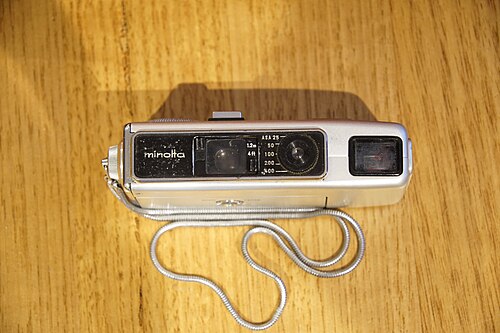
Minolta 16 MG-S
SubminiatureView exhibit
Minolta SR-M — photograph of the actual film cameraPhotograph credit
1970Introduction / documented date
Minolta SRM
SR-M and SRM are spelling forms for the same motorized camera. The original manual’s 3 fps maximum is used instead of the 3.5 fps figure repeated by some secondary lists.
The SR-M was a motorized 35 mm SLR introduced in 1970. Its detachable grip held eight AA batteries to power film advance and rewind; the original manual specifies a maximum of three frames per second. The mechanical shutter supplied 1 second to 1/1000 second, plus long-exposure settings, and the film could also be advanced manually. Interchangeable SR-mount lenses, an eye-level prism with microprism focusing, a mirror-lock control and a removable back made it adaptable to specialized work. A 250-exposure back was available as an accessory. Exposure remained manually set without a built-in meter. The photograph shows the motorized body and grip with a body cap in place.
Inside the camera
Specifications describe the model shown in the record. Lenses, finishes, and regional editions may vary.
Follow the evidence
Kuyohong. CC BY-SA 4.0. Original photograph. Resized for display against tinted backgrounds.
Dates refer to model introduction unless otherwise stated. A photograph documents a representative example, not every production variant. How we research the collection.
Keep exploring