 1962
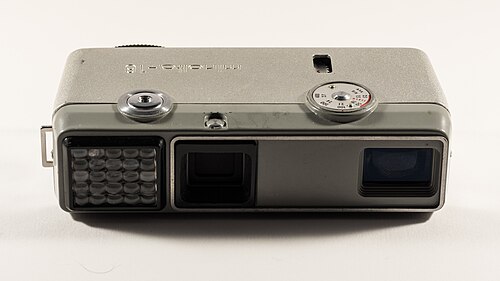
Minolta 16 EE
SubminiatureView exhibit
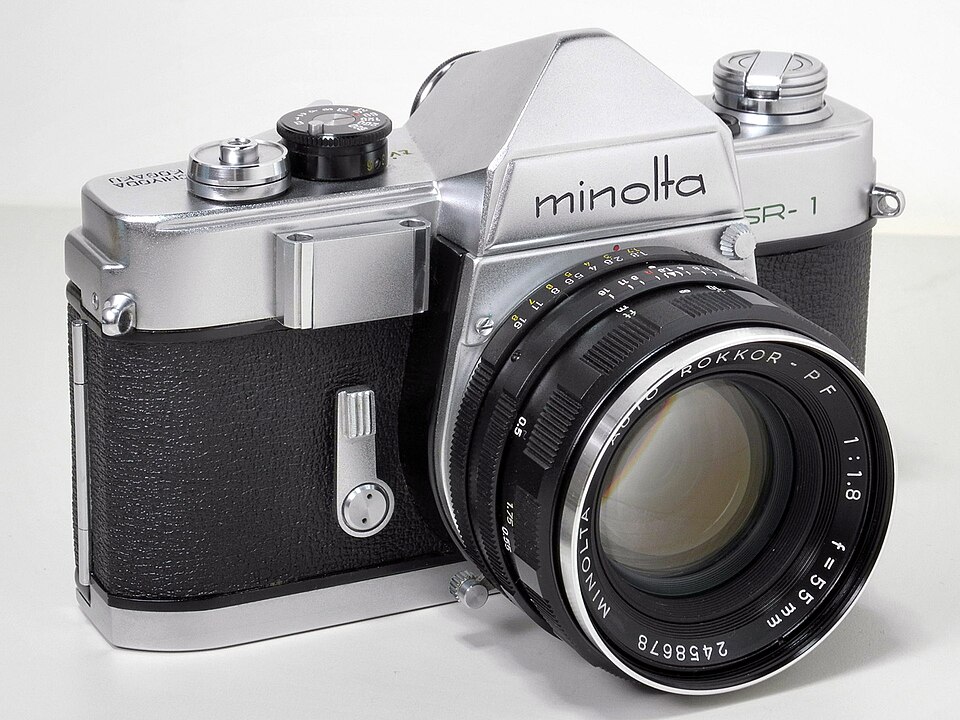
Minolta SR-7 — historical camera photographPhotograph credit
1962Introduction / documented date
Minolta SR7
The 1963 and Model V revisions retained the SR-7 name but changed the mechanism or body; they are not additional regional names.
The SR-7, introduced in 1962, placed a CdS exposure meter inside the camera body. Its round front-facing sensor measured light externally, rather than through the taking lens; the top-mounted meter indicated an aperture after the photographer selected a shutter speed. The camera used the Minolta SR bayonet, fully automatic lens diaphragm operation and a mechanical focal-plane shutter with speeds from 1 second to 1/1000 second plus B. A self-timer and mirror lock were supplied. The photograph shows the earlier rounded body style. A meter switch and revised mirror-lock operation arrived in 1963, followed by the more angular Model V body in 1965; the photograph does not establish which of the first two revisions is shown.
Inside the camera
Specifications describe the model shown in the record. Lenses, finishes, and regional editions may vary.
Follow the evidence
s58y. CC BY 2.0. Original photograph. Resized for display against tinted backgrounds.
Dates refer to model introduction unless otherwise stated. A photograph documents a representative example, not every production variant. How we research the collection.
Keep exploring