 1960
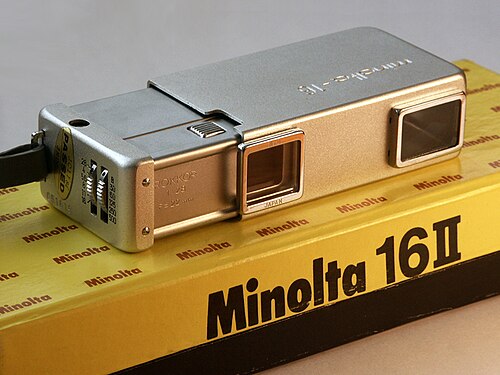
Minolta 16 II
SubminiatureView exhibit
Minolta SR-3 — photograph of the actual film cameraPhotograph credit
1960Introduction / documented date
Minolta SR3
The 1960 and 1961 bodies retain the SR-3 name. Their different diaphragm mechanisms are running revisions, not regional aliases.
The SR-3 succeeded the SR-2 in 1960 and provided a front mounting block for a detachable exposure meter. Its SR bayonet accepted interchangeable lenses, while the mechanical focal-plane shutter offered 1 second to 1/1000 second plus B. An eye-level prism, instant-return mirror, split-image focusing aid and self-timer supported everyday 35 mm photography. The family underwent an important change in 1961: the diaphragm then reopened automatically after exposure, rather than waiting for film advance. The surviving instruction edition cited here describes that later operation. The photograph clearly shows an SR-3 without its optional meter, but does not establish whether its diaphragm mechanism is the 1960 or 1961 version.
Inside the camera
Specifications describe the model shown in the record. Lenses, finishes, and regional editions may vary.
Follow the evidence
Bill. CC BY 2.0. Original photograph. Resized for display against tinted backgrounds.
Dates refer to model introduction unless otherwise stated. A photograph documents a representative example, not every production variant. How we research the collection.
Keep exploring